

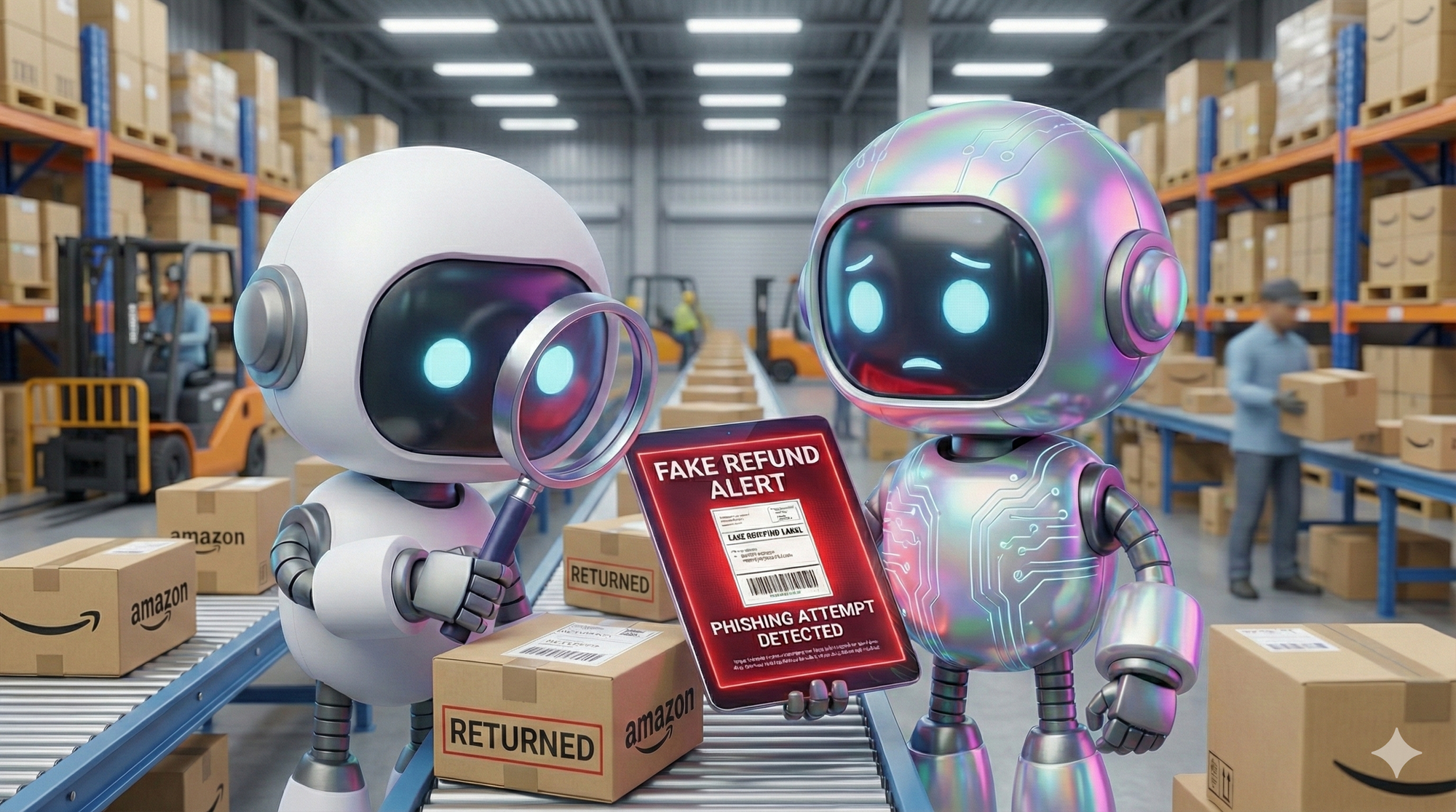
The wrapping paper has been torn, the gifts exchanged. But what happens when that sweater doesn't fit, or that gadget doesn't work? You turn to Google to find a customer service number, or you check your phone for delivery updates.
Could you stop right there?
According to the National Retail Federation (NRF), return fraud and delivery scams are estimated to cost consumers over $100 billion in 2025 alone. But the real danger isn't just about lost packages; it's about you handing over your credit card details to a fake agent.
At Counterfake, we know that scammers work overtime between Christmas and New Year's. Here is your guide to surviving the "Return Season" safely.
1. The "SEO Poisoning" of Customer Support
This is the most common and dangerous trap of late 2025. When you Google "Amazon support phone number" or "Delta Airlines refund," the top result might not be real.
- The Scam: Scammers buy "Sponsored Ads" on search engines that look exactly like official company contacts. When you call, a polite "agent" (often using AI voice changers) asks for a small "processing fee" or "remote access" to your phone to "process the refund."
- The Data: A recent alert from the Better Business Bureau (BBB) (December 2025) highlighted a surge in "Tech Support Impersonation," noting that 60% of victims found the fake number via a search engine ad.
Pro Tip: Never trust the "Featured Snippet" or the first ad on Google. Always go directly to the official app or type the URL (e.g., amazon.com/contact) manually.
2. The "Payment Failed" & Delivery Suspended Trap
You are anxiously waiting for last-minute gifts. Suddenly, your phone buzzes with a text: "UPS/FedEx: Your package delivery is suspended due to an unpaid customs fee of $2.99. Pay now to release delivery."
- The Hook: It sounds plausible. You think, "Maybe the sender didn't pay the full shipping?" or "Is this a customs tax?" Panic sets in; you want the gift to arrive before Christmas.
- The Scam: You click the link, which leads to a perfect clone of the courier's website. You enter your credit card to pay the tiny $2.99 fee. The scammers now have your card details and will drain your account within minutes.
- The Reality: Legitimate couriers (USPS, DHL, FedEx) never demand instant credit card payments via text message links for small fees.
3. The "Gift Card Draining" Epidemic
Did you receive a gift card this year? Check it immediately.
- Mag-Stripe Cloning: Sophisticated gangs are now using handheld scanners to clone the magnetic stripes of gift cards while they are still on the store rack. They wait for a legitimate customer (your aunt) to activate the card, and then a bot instantly drains the funds before you even unwrap it.
- The Fix: If you receive a physical gift card, check if the protective sticker on the back has been tampered with. If the PIN is visible, do not use it; return it to the store immediately with the receipt.
4. How to Handle Returns Like a Pro (Safety Checklist)
Don't let a bad return ruin your holiday spirit.
- Use the App: Most major retailers (Amazon, Walmart, Target) handle returns exclusively through their official apps. Avoid calling phone numbers found on Google.
- Verify the Email Sender: If you get an email about a "Refund Approved," check the sender's address.
support@amazon-returns-dept-24.comis FAKE. Real emails come from@amazon.com. - Never Pay to Get Paid: A legitimate refund never requires you to pay a "verification fee" or buy a gift card. If a support agent asks for money, hang up.
Conclusion: End the Year Smart
As we move into 2026, the lines between real and fake are blurring—whether it's AI Video Scams or fake delivery notifications.
Take a breath. Don't rush your returns. Verify every link. From all of us at Counterfake, we wish you a safe, scam-free holiday season and a secure New Year.
References:
- National Retail Federation (NRF): "2025 Consumer Returns in the Retail Industry Report."
- Better Business Bureau (BBB): Scam Alert: "Fake Customer Service Numbers on the Rise" (Dec 2025).
- Federal Trade Commission (FTC): Consumer Sentinel Network - "Text Message Phishing Trends 2024-2025."
- McAfee Labs: "Holiday Threat Report: The Rise of QR Code & Gift Card Fraud."